
Your sample parts arrive, pass the initial fit check, and move into a small production run. Then the trouble starts: the finish changes, a critical dimension drifts, or the supplier asks to replace the original process because the first parts were made using a method that doesn’t scale.
This is the risk behind a seemingly simple sourcing question. A supplier may be able to machine one good sample without having a controlled path to recurring production. If you want one China CNC machining manufacturer to support the full program, evaluate continuity before approving the first order—not after the sample is signed off.
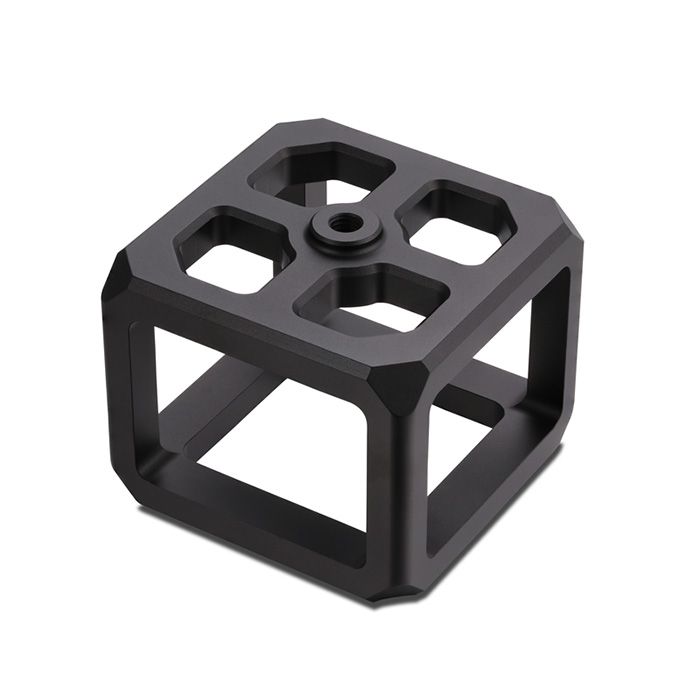
Yes, one manufacturer can support samples, small batches, and production orders. The practical condition is that the machining route, inspection requirements, finishing plan, and production records are defined early enough to carry forward.
DS Industrial (Shenzhen) Co., Ltd. provides CNC milling and turning for flexible small-batch work and customized mass production. It also offers die casting, investment casting, sheet metal fabrication, and assembly. That broader process range matters when production economics or part geometry eventually point away from machining the entire part from solid stock.
Continuity doesn’t mean every stage must use identical tooling or workholding. Prototype fixtures may be replaced by more efficient production fixtures, and inspection frequency may change after the process is shown to be stable. The manufacturer should still identify those changes, explain their effect, and preserve the approved drawing requirements.
Ask for the intended production route with the sample quote. That one request exposes a common weakness: a sample may be technically possible, but awkward or expensive to repeat. A useful quote should therefore cover more than unit price. It should identify the manufacturing process, material, finish, quantity, inspection expectations, lead-time assumptions, and any open technical questions.
These order stages aren’t simply different quantities of the same thing. Each one answers a different question, and treating them as interchangeable can hide risk.
| Order stage | Primary purpose | What you should confirm |
|---|---|---|
| Samples | Test the drawing, machining approach, fit, function, finish, and inspection method | Critical dimensions, material callout, drawing revision, surface requirements, and first-article documentation |
| Small batches | Check repeatability and expose handling, fixturing, finishing, and assembly issues | Approved process changes, lot identification, inspection frequency, packing method, and realistic replenishment timing |
| Recurring production | Maintain consistent output across purchase orders | Revision control, change approval, material records, inspection reporting, capacity planning, and shipping instructions |
A CNC sample should do more than prove that metal can be removed until the part resembles the CAD model. It should reveal inaccessible features, fragile walls, difficult datum structures, excessive setups, burr-prone intersections, tool-reach problems, and tolerances that conflict with the geometry or finish.
Critical requirements need to be visible in the RFQ. A model alone may not communicate datum relationships, threads, edge breaks, cosmetic surfaces, grain direction, or which dimensions affect mating components. If a tolerance applies only to one functional interface, identify it. Applying tight tolerances to every feature can increase inspection and machining effort without improving the assembly.
Inspection should also be agreed before cutting starts. DS Industrial describes visual and dimensional inspection, CMM inspection, and first-article reports on request. Material certificates or test reports are also available on request. The words on request matter: if your approval process needs a particular record, list it in the RFQ and purchase order rather than assuming it will be included.
You can review examples of custom CNC machined parts to discuss comparable geometry or finishing requirements, but a gallery image isn’t a substitute for engineering review of your files.
A small batch shows what a single sample cannot. Multiple pieces reveal whether loading, clamping, tool wear, deburring, finishing, inspection, and packing can be repeated without creating unacceptable variation.
This is the stage to resolve process questions. Will the same stock form be used for future orders? Are soft jaws, dedicated fixtures, or inspection aids needed? Which dimensions require recorded results, and which can be checked using routine shop-floor gauges? Can parts contact one another during finishing or transit, or does each surface need protection?
Changes aren’t automatically a warning sign. A manufacturer may reasonably propose different workholding or a revised operation sequence for production. The problem is an undocumented change that affects a datum, cosmetic surface, tolerance, or approved finish. Require written approval for changes that could alter form, fit, function, appearance, or traceability.
Some parts should not remain CNC-machined indefinitely. As quantity rises, die casting, investment casting, or sheet metal fabrication may become relevant, depending on geometry, material, tolerance, tooling cost, and expected demand. There is no universal crossover quantity. The decision needs a part-specific comparison, followed by validation of any new process because cast or formed parts do not behave exactly like parts machined from billet.
A machine list is useful only when it is connected to the proposed operation plan. Buyers often ask whether a shop has five-axis machining or precision turning, but the better questions are which machine is intended for the part, how many setups are expected, what features create access problems, and how the part will be held without distortion.
DS Industrial lists Makino V33I, V56I, and V80S equipment among its CNC milling resources. Its website also describes a unibody enclosure produced using 5-axis machining. This process allows cutting tools to approach complex geometry from multiple orientations, which can reduce repositioning and help maintain relationships between features that would otherwise be machined in separate setups.
That does not make five-axis machining the default answer. A simpler prismatic component may be more efficiently produced with conventional milling and planned refixturing. Five-axis access is most relevant where geometry, tool reach, compound angles, or setup-related alignment justify it.
Machine model alone doesn’t establish feasibility. The engineering review still has to consider overall part size, stock dimensions, tool clearance, workholding space, depth-to-width relationships, thin sections, material behavior, and access to internal features. If those details are not clear from the drawing and CAD file, the quote should carry questions or assumptions rather than a confident but incomplete price.
See the 5-axis machined enclosure example as a reference point for discussion, then provide your own model and controlled drawing for evaluation.
For turned components, DS Industrial lists Nakamura WY-100II and MX-100 machines along with Citizen M32 and L20S equipment. These named resources help establish the available equipment base, but they do not replace a part review.
Turning is generally suited to components whose primary geometry is organized around a rotational axis. Milled flats, cross-holes, slots, threads, grooves, and other secondary features can change the operation plan. Long slender sections may be vulnerable to deflection; thin walls may distort under clamping or cutting pressure. Burrs at intersecting holes can also become a functional problem even when the measured dimensions pass.
Send the complete geometry instead of requesting a price from a simplified diameter-and-length description. The supplier needs to see every secondary feature, tolerance, surface callout, thread specification, and edge condition to select the machining route and estimate setups accurately.
The inspection plan should preserve an auditable connection between the approved part and later orders. That starts with a controlled drawing revision and continues through first-article approval, production inspection, nonconformance handling, packing, and shipment.
DS Industrial states ISO 9001:2015 compliance and describes visual inspection, dimensional inspection, and CMM inspection. Buyers should still define the documentation their own quality system requires. ISO compliance does not automatically determine which dimensions will be reported, how often parts will be sampled, or what certificate format will be supplied.
CMM inspection is useful for geometry suited to coordinate measurement, but not every requirement is best verified that way. Threads, finishes, visual defects, edge conditions, and some internal features may need different methods. A credible inspection discussion matches the measurement method to the characteristic instead of treating one machine as proof that every requirement is covered.
AI can help flag missing dimensions, ambiguous notes, unusual tolerance patterns, and potential manufacturability concerns. It cannot confirm the final machining route, fixture design, tool access, measurement method, finishing availability, or production schedule.
Lead time depends on the actual part. Geometry and complexity affect programming, setup count, tool choice, machining time, deburring, and inspection. Material availability, quantity, finish, post-processing, documentation, packing, and shipping method also matter. A simple repeat order with stable files is a different scheduling problem from a new assembly containing several revised components.
Be cautious with instant answers that don’t disclose assumptions. A fast preliminary estimate can help with sourcing, but it should be followed by engineering review before you treat price or timing as firm. Changes to material, tolerance, quantity, or finish can invalidate the original estimate.
There are also practical limits. Deep narrow pockets may restrict tool access. Thin walls can move during machining. Tight positional requirements across multiple setups demand a credible datum and fixturing strategy. Cosmetic finishes can expose handling marks that have no effect on dimensional compliance but still cause rejection. Some internal geometry may not be machinable as modeled.
A capable supplier should say where the drawing creates uncertainty. Silence is not proof of manufacturability.
Your RFQ is the working specification for the commercial and technical handoff. Include enough information for the manufacturer to evaluate the sample and the intended production path, not just the first quantity.
For U.S. delivery, clarify who controls freight, which shipping term applies, what documents must accompany the order, and whether the delivery point is a dock, warehouse, contract manufacturer, or other receiving location. Freight time should not be confused with manufacturing lead time. Customs clearance and final-mile arrangements also need clear ownership.
One manufacturer can support all three stages if the sample is planned as the start of production rather than a standalone demonstration. Send complete files, state your inspection and documentation needs, and ask how the proposed process will carry into repeat orders. To start that discussion, review DS Industrial’s CNC machining work and part examples, then submit the drawing, quantities, finish, packing, and U.S. delivery requirements for engineering review.
Most of our quotes are delivered within 24/36 hrs. and usually in much less time, depending on project details.
Our team will contact you directly about your CNC machining quote to ensure you’ve received and understand all aspects of your quotation and to answer any questions you may have about your options.