
You have a finalized PCB and a CAD file. Now you need a physical shell that keeps the elements out and the electronics intact. Choosing the manufacturing method for a custom sensor housing is a permanent commitment to a specific cost structure, material limitation, and production timeline. Pick wrong, and you either bleed margin on unnecessarily machined parts or deal with field failures from cast enclosures that cannot hold a seal.
Engineers often default to the process they know best. A machining shop will tell you billet aluminum is superior; a casting house will push you toward tooling. The reality is strictly mathematical.
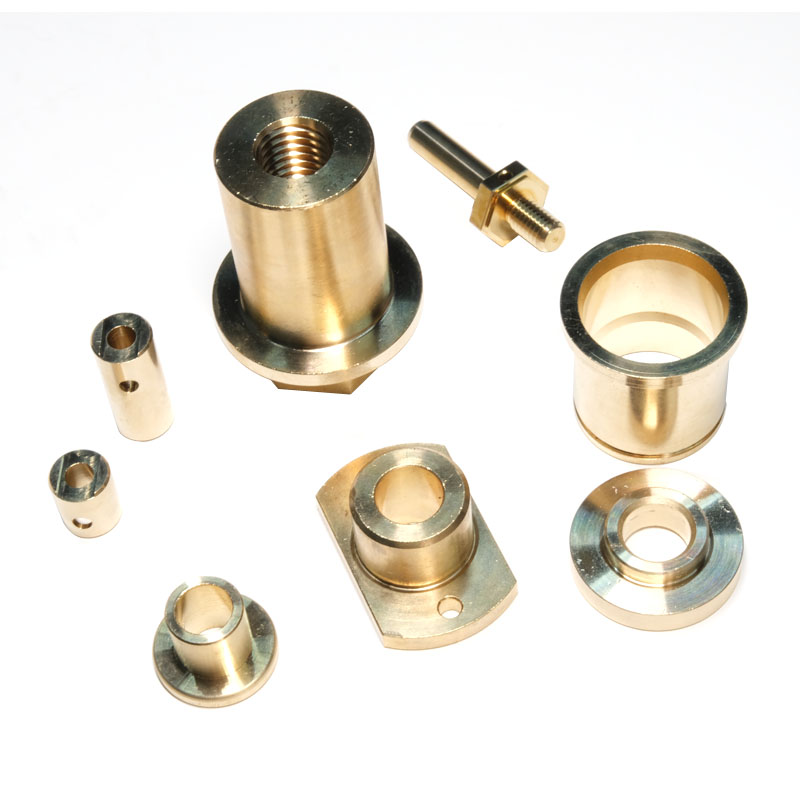
Do not waste weeks evaluating both processes if your project parameters already disqualify one of them. The decision tree is shorter than most buyers realize.
CNC machining is the correct choice if you need fewer than 1,000 units, your design is still evolving, you require hard metals like 316L stainless steel, or the enclosure relies on extreme precision (±0.005mm) for O-ring glands and threaded fluid connections.
Die casting wins outright if your volume exceeds 5,000 units, the design is entirely frozen, you are working with aluminum or zinc, and the part features complex internal geometries with thin walls that would take hours to machine out of a solid block.
The financial behavior of these two methods could not be more different. Machining scales linearly. Casting scales logarithmically. Understanding where your project sits on that curve dictates your unit economics.
| Parameter | CNC Machining | Die Casting |
|---|---|---|
| Upfront Tooling Cost | Zero (Only programming and fixturing) | High ($5,000 to $30,000+ for H13 steel molds) |
| First Article Lead Time | 1 to 2 weeks | 4 to 8 weeks |
| Per-Unit Cost at Volume | High (Machine time dominates cost) | Low (Material and rapid cycle time dominate) |
| Standard As-Made Tolerance | ±0.01mm to ±0.05mm | ±0.05mm to ±0.1mm (Secondary machining often required) |
The greatest advantage of a CNC machined sensor housing is flexibility. If a client requests a different thread pitch for a specialized industrial installation, you update the CAM program. The next part off the mill reflects the change.
This high-mix, low-volume adaptability makes machining ideal for specialized industrial sensors, bespoke medical equipment, and aerospace components. You avoid the sunk cost of a steel mold. You also achieve superior surface finishes right off the machine, which is critical for seating elastomer seals in IP68-rated devices. The downside is cycle time. Hogging out 80% of a solid billet to create a thin-walled enclosure takes minutes or hours per part, driving up the piece price permanently.
Once a die casting mold is cut from hardened H13 tool steel, the economics flip. Molten metal is injected under extreme pressure, cooling into a near-net shape in seconds. An operator can eject thousands of enclosures in a single shift.
The upfront capital expenditure is painful, but the amortization across a 50,000-unit run drops the per-piece cost to a fraction of machined equivalents. However, die casting is not a perfectly finished process. Ejector pin marks, draft angles (usually 1 to 2 degrees to get the part out of the mold), and parting lines are unavoidable. If your enclosure requires perfectly flat mating surfaces or precision tapped holes, you will still need secondary CNC operations on the cast blank.
Industrial IoT deployments are pushing electronics into environments that destroy standard consumer plastics in days. Enclosures now face constant salt spray, extreme vibration, caustic chemical washdowns, and massive thermal shock.
Your manufacturing method limits your material menu. Die casting is restricted to non-ferrous metals with relatively low melting points. Aluminum alloys like A380 or ADC12 are the industry standard, offering excellent strength-to-weight ratios and natural EMI/RFI shielding. Zinc alloys like Zamak 3 cast beautifully, allowing for walls as thin as 0.5mm while maintaining structural rigidity.
You cannot die-cast stainless steel. If your application demands compliance with NEMA 4X or IP69K washdown standards in a food processing plant, aluminum will corrode under caustic cleaning agents. You are forced into 304 or 316L stainless steel. That material requirement dictates that you must CNC machine the enclosure (or use investment casting for rougher near-net shapes).
Different sensors fail for entirely different reasons. An enclosure that works perfectly for a warehouse temperature monitor will cause catastrophic failure in a hydraulic line.
Pressure transmitters, RTDs, and industrial thermocouples operate in unforgiving conditions. An OEM pressure sensor housing manufacturer knows that failure here means a fluid leak, which can shut down a factory floor or cause a blowout.
These housings are almost exclusively CNC machined from hex stock or cylindrical stainless steel billets. The design usually incorporates NPT or BSP threaded connections that must mate perfectly with existing pipework. Machining guarantees the concentricity of the internal bores and the precise geometry of the metal-to-metal sealing surfaces. The high tensile strength of machined stainless steel ensures the housing can withstand burst pressures exceeding 10,000 PSI without deforming.
Gas detectors, HVAC airflow sensors, and consumer IoT devices face different threats. They rarely hold high fluid pressure. Instead, they need to protect sensitive PCBs from electromagnetic interference, physical impact, and dust.
Die-cast aluminum is the dominant choice here. It provides a Faraday cage around the electronics, blocking EMI that would otherwise cause false readings in sensitive gas sensors. For intricate internal channels—like those required to direct ambient air over a specific sensor node—zinc die cast sensor components excel. Zinc's high fluidity when molten allows it to fill complex, microscopic mold features that would require custom, fragile end-mills to machine.
Sourcing custom industrial sensor enclosures from overseas contract manufacturers introduces a specific set of risks. The most dangerous failures are the ones you cannot see with the naked eye.
The inherent enemy of die casting is internal porosity. When molten metal is injected into a die at high speed, trapped air can form microscopic voids beneath the skin of the part. The enclosure looks flawless on the inspection table. But if you tap a thread into that porous section, or if the part is subjected to internal pressure, it will leak like a sieve. For any pressure-critical application, X-ray flaw detection is non-negotiable. It is the only way to peer inside the casting and verify structural density before the part ships.
Machined parts face different quality threats, primarily tool wear and deflection. A dull end-mill will push away from the material, leaving an O-ring groove a few microns too shallow. Over a batch of 500 parts, that dimensional drift causes seal failures. Quality control requires a Coordinate Measuring Machine (CMM) to probe the internal geometry and verify compliance with strict GD&T (Geometric Dimensioning and Tolerancing) callouts.
When evaluating a partner like DS Industrial, look past the machinery on the floor. A supplier's ISO 9001:2015 certification and their in-house inspection capabilities—specifically CMM and X-ray—are what actually protect your assembly line. Specify your inspection requirements directly on your RFQ. Tell the manufacturer exactly which surfaces require a CMM report and which cast batches need X-ray sampling. Clear boundaries established early prevent costly redesigns later.
Most of our quotes are delivered within 24/36 hrs. and usually in much less time, depending on project details.
Our team will contact you directly about your CNC machining quote to ensure you’ve received and understand all aspects of your quotation and to answer any questions you may have about your options.