
A sensor housing acts as the primary mechanical, chemical, and electromagnetic barrier between a delicate sensing element and the environment it monitors. When you specify a Sensor Housing and Enclosure, you are deciding the total functional lifespan of your instrument. A brilliant MEMS chip or finely tuned ASIC means nothing if moisture breaches the seal or if thermal expansion warps the casing and alters the calibration.
DS Industries (Shenzhen) Co., Ltd. manufactures custom enclosures for B2B buyers who need predictable performance at scale. As a direct-to-factory partner in China, we supply wholesale and custom components engineered to protect temperature, pressure, force, gas, and flow sensors. We rely on CNC machining, die casting, investment casting, and sheet metal fabrication to match your production volume, delivering factory discount prices without compromising the tight tolerances required for industrial instrumentation.
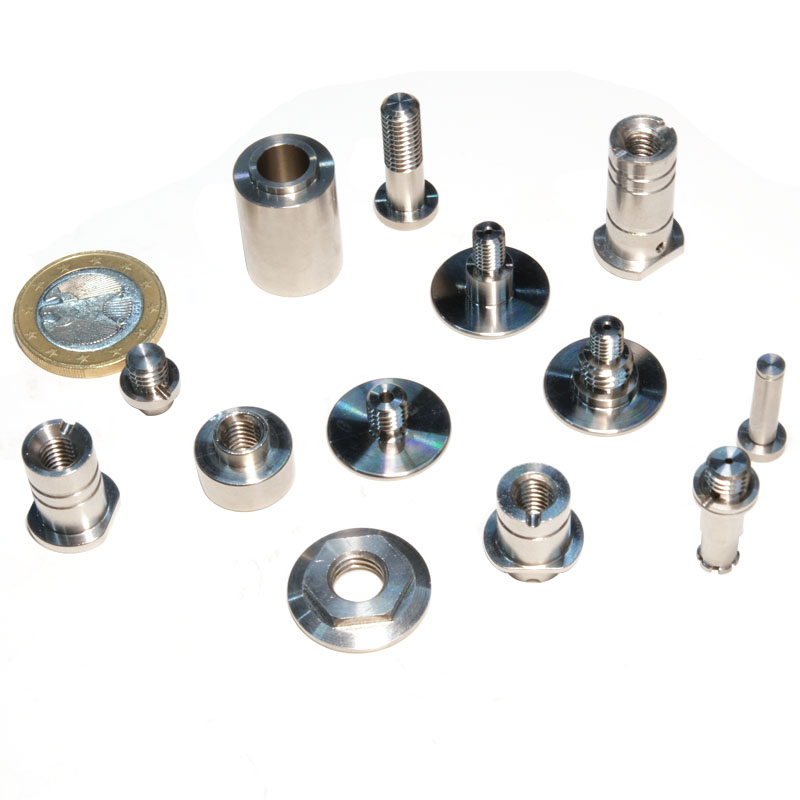
Engineers often spend months selecting the perfect sensing element, only to wrap it in an enclosure that fails in the field. Real-world sensor failures rarely start at the silicon level. They start when a cheap, poorly toleranced housing allows microscopic ingress.
Consider a waterproof sensor housing custom designed for a marine application. If the internal O-ring groove is machined with a surface finish rougher than Ra 0.8, the elastomer cannot seat properly. Capillary action pulls moisture past the seal during temperature cycling. The sensor shorts out. The cost of replacing that sensor in the field dwarfs whatever pennies were saved on the enclosure.
Enclosure quality dictates reliability across three distinct failure modes:
Working with an experienced custom sensor housing manufacturer prevents these outcomes. We catch design flaws before cutting metal, ensuring the enclosure actually protects the investment inside.
The biggest mistake buyers make is designing a part for one manufacturing process and expecting it to transition instantly to another as volumes scale. A housing optimized for a five-axis mill will almost certainly trap the tool in a die-casting mold. You have to design for the process.
For low-to-medium volumes, or when dimensional accuracy is non-negotiable, a cnc machined sensor housing is the default choice. Machining allows for complex internal geometries, undercuts, and extremely tight tolerances (down to ±0.005mm) that casting cannot match without secondary operations.
This process is ideal for cutting a stainless steel sensor enclosure out of 304 or 316L billet. Stainless steel is notorious for work-hardening and requires rigid machine setups and precise feed rates. Machining is the right choice when bringing a new sensor to market, allowing you to iterate the design without paying for expensive tooling. You pay a higher piece price, but you retain absolute flexibility.
When you transition from hundreds of units to tens of thousands, machining every part from solid billet destroys your profit margins. This is where die cast sensor enclosures take over. By forcing molten aluminum or zinc into a hardened steel mold under high pressure, we can produce near-net-shape housings in seconds.
Die casting dramatically lowers the unit cost for wholesale production. You will pay an upfront tooling cost, which is amortized over the life of the product. However, the part must be designed for manufacturability (DFM). Walls must be relatively uniform to prevent sink marks as the metal cools. Draft angles (typically 1 to 3 degrees) must be added so the part can eject from the mold. Sharp internal corners must be radiused.
For high-strength alloys like stainless steel that cannot be die-cast, investment casting (lost wax) provides a scalable alternative. It yields excellent surface finishes and complex shapes, making it a staple process for heavy industrial sensor enclosure fabrication.
Different physical variables demand entirely different enclosure architectures. A housing built to measure 10,000 PSI of hydraulic fluid will not work for measuring ambient room temperature. Understanding the structural trade-offs of your specific sensor category is vital.
A pressure sensor enclosure supplier knows that burst pressure is the critical metric. These housings are pressure vessels. They must withstand not just the nominal operating pressure, but extreme transient spikes (water hammer) without permanent deformation.
The housing typically features a thick-walled monolithic design to prevent the sensor diaphragm from experiencing external mechanical stress during installation. Thread integrity is paramount. If you are threading a 316L stainless steel sensor housing into a stainless steel pipe, thread galling—where the metals cold-weld together under friction—can ruin the installation. We machine precise NPT or BSP threads and can apply specific surface treatments to mitigate galling. The internal cavity must also perfectly mate with the pressure transducer, leaving no dead volume where viscous fluids could clog.
These sensors face a contradictory set of requirements. They must protect the element while allowing the environment to interact with it as rapidly as possible.
Temperature: A temperature sensor housing wholesale order usually specifies thin-walled probes. The thicker the wall, the higher the thermal mass, which creates a lag in response time. We machine or draw these enclosures to the minimum safe wall thickness, ensuring the sensor registers temperature changes instantly while retaining enough rigidity to survive fluid velocity in a pipe.
Gas: A gas sensor enclosure bulk order focuses on diffusion. The housing must allow target gases to reach the sensing element while blocking dust, liquid water, and wind interference. This often requires integrating sintered metal filters or PTFE membranes into the custom housing. The internal volume must be kept small to ensure the gas purges quickly, preventing false positive readings from trapped stagnant air.
Flow: Flow sensor housings must consider fluid dynamics. Any sharp edges or sudden changes in internal diameter will create turbulence, which directly degrades the accuracy of ultrasonic or magnetic flow meters. The internal bore must be machined to a highly smooth finish to maintain laminar flow.
As industrial facilities deploy dense IoT networks and prepare for high-frequency 6G communications, electromagnetic interference (EMI) and radio frequency interference (RFI) have become critical failure modes. A sensor housing is no longer just a mechanical barrier; it is a Faraday cage.
Metal enclosures naturally reflect electromagnetic waves, but an enclosure is rarely a single solid piece of metal. It has lids, connector cutouts, and cable glands. High-frequency noise will leak through any gap that is longer than a fraction of the target wavelength. A standard rubber O-ring provides water resistance but leaves an electrical gap between the lid and the base, turning the slot into a slot antenna that radiates or absorbs noise.
To fix this, the housing design must incorporate conductive paths. We machine precise grooves to accommodate conductive elastomer gaskets (silicone filled with silver or nickel particles). If the housing is anodized aluminum, the anodized layer acts as an insulator. We must mask off the mating surfaces or use a secondary CNC operation to strip the anodizing away from the grounding points, ensuring metal-to-metal contact across the entire assembly.
You cannot look at a machined or cast housing and know it will survive its operating environment. Trusting visual inspection for an industrial sensor enclosure is a guaranteed way to ship defective products.
DS Industries backs our production with in-house quality inspection including CMM, X-ray, and salt mist testing. This suite of nondestructive testing (NDT) removes the guesswork from OEM sensor housing China sourcing:
By keeping this testing in-house under our ISO 9001:2015 certified quality management system, we catch deviations immediately and adjust the manufacturing process before bad parts end up in your assembly line.
Buyers sourcing enclosures often face a maze of opaque pricing and unpredictable delays. Here is how DS handles the realities of custom manufacturing.
Do you offer factory discount prices for custom enclosures?
Yes. Because we are the direct manufacturer rather than a broker, we control the floor. We offer tiered wholesale pricing based on volume. We also review your CAD files to suggest minor DFM changes—like standardizing a corner radius or altering a draft angle—that can significantly lower your unit cost without affecting performance.
What is the typical lead time for a custom sensor housing?
For CNC machined prototypes, we can often deliver within 7 to 15 days, depending on material availability and surface finishing requirements. For die casting or investment casting, the tooling phase dictates the timeline. Mold design, cutting, and first-article approval usually take 3 to 5 weeks. Once the mold is approved, bulk production runs rapidly. We partner with global logistics networks to ensure air or sea freight aligns with your assembly schedule.
Can you handle the entire enclosure assembly?
We manufacture the metal and sheet metal components. We can supply unibody enclosures, machined manifolds, and multi-part housings complete with requested surface treatments (anodizing, powder coating, passivation). You receive a finished mechanical component ready for your electronics integration.
Stop risking expensive sensor elements inside substandard casings. Specify exactly what your application requires, and let a dedicated factory deliver it at scale. Contact DS Industries today to discuss your CAD files, request factory direct pricing, and start your next production run.
Most of our quotes are delivered within 24/36 hrs. and usually in much less time, depending on project details.
Our team will contact you directly about your CNC machining quote to ensure you’ve received and understand all aspects of your quotation and to answer any questions you may have about your options.